
ImageProVision
Microbiology Colony Counting and Gram Staining
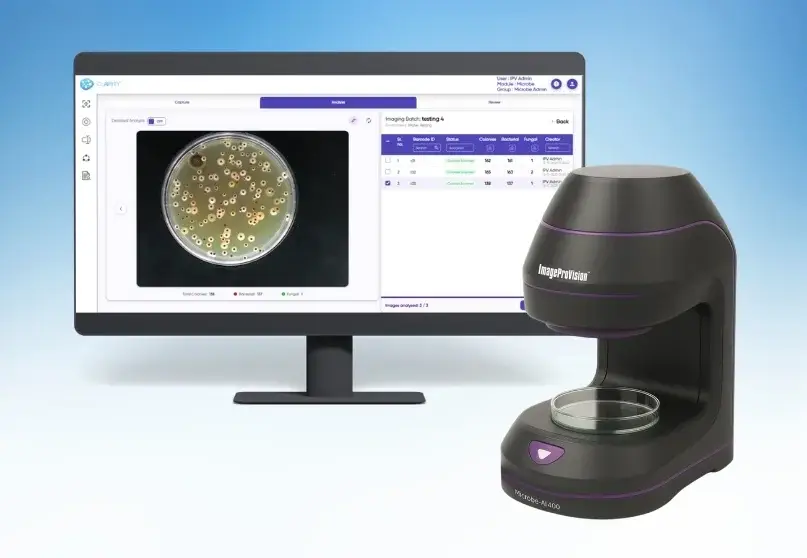
ImageProVision specialize in providing the clarity and precision needed for advanced microbiological analysis.
Whether you are working in a high-tech pharmaceutical lab or monitoring food safety, understanding the quantity and type of bacteria in your samples is vital. Here is a simple guide to how colony counting and Gram staining work together to safeguard your products.
1. Colony Counting: Measuring the Quantity
Colony counting is the standard method for determining the “microbial load” or how much bacteria is present in a sample.
How it works: A sample is spread onto a nutrient-rich plate. Each single, living bacterium grows into a visible cluster called a “colony.”
The Goal: By counting these colonies, scientists calculate the concentration of bacteria in the original sample.
The Challenge: Manual counting can be slow and prone to human error, especially with irregular or overlapping colonies.
2. Gram Staining: Identifying the Type
While counting tells you how many, Gram staining tells you what kind. This process uses a specific series of dyes to categorize bacteria based on their cell wall structure.
Gram-Positive (Purple): These bacteria have thick cell walls that retain the initial purple dye.
Gram-Negative (Pink): These bacteria have thinner walls and take on a pink/red color from the final “counterstain.”
Why it matters: This distinction is the first step in identifying a species and choosing the right antibiotic or disinfectant.
Why Use Both? A Complete Microbial Profile
Using these two methods together provides a full picture of your sample:
Quantification: You know the scale of the growth.
Classification: You know if you are dealing with a single type of contaminant or a complex mixture.
Industry Applications
Microbiology isn’t just for the lab; it’s essential for safety across multiple sectors:
| Industry | Primary Use Case |
| Pharmaceuticals | Validating sterilization, testing drug efficacy, and meeting regulatory audits. |
| Food Safety | Monitoring spoilage organisms and checking if preservatives are working. |
| Environmental | Tracking microbial levels in water, air, and soil to protect public health. |
| Clinical Research | Making rapid decisions for infection control and tracking antibiotic resistance. |
Problems Addressed by ImageProVision Microbe AI
The “Microbe AI” platform is specifically engineered to solve inefficiencies in traditional laboratory workflows:
Manual Counting Errors: Traditional “eye-balling” of Petri dishes is prone to human error and fatigue. The AI provides high-precision CFU (Colony Forming Unit) countin
Time Consumption: It automates the analysis of microbial growth, significantly reducing the time required for sample processing.
Complex Morphology: The AI can distinguish between different types of microbial colonies, handling overlaps and varying sizes that are difficult for basic software to separate.
Data Integrity & Compliance: It generates digital records and audit trails, helping pharmaceutical labs meet 21 CFR Part 11 and other regulatory requirements.